

By Dr. Zach Greenwade, DC, MS | Published: Novmeber 2nd, 2026
3 Levels of Exercises for Hip Osteoarthritis: A Progressive Guide to Improving Hip Strength and Mobility
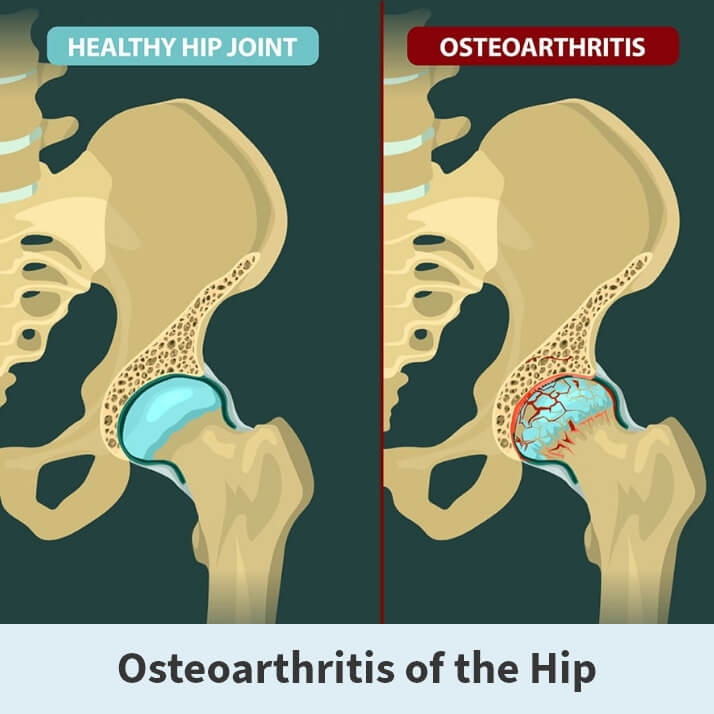
If you are dealing with hip pain, stiffness, or difficulty with everyday activities, you may be experiencing hip osteoarthritis (Hip OA). Hip OA occurs when the cartilage and other structures within the hip joint undergo changes, often resulting in pain, reduced mobility, and difficulty with activities such as walking, climbing stairs, and getting up from a chair.
The good news is that exercise is one of the most important treatments for managing hip osteoarthritis. Research supports progressive strengthening and physical activity to improve muscle function, mobility, and overall physical function.
However, knowing which exercises to perform—and how to progress them—is important. Starting with exercises that are too challenging can aggravate symptoms, while exercises that are too easy may not provide enough stimulus to improve strength and function.
Here is our progressive, 3-level hip osteoarthritis exercise guide to help you build strength, improve hip control, and move more comfortably.
The 3-Level Hip Osteoarthritis Exercise Progression
The goal of this program is to gradually improve hip strength, stability, and functional capacity. Each level builds on the previous one, allowing you to progress from simple seated exercises to more challenging standing and functional movements.
To see these movements in action and ensure your form is correct, watch our full video breakdown on the Performance Sport & Spine YouTube Channel.
Level 1: Seated Strengthening & Initial Muscle Activation
The goal of Level 1 is to introduce gentle strengthening exercises while minimizing the demands placed on the hip joint. These exercises are particularly useful if you are experiencing pain, stiffness, or difficulty tolerating standing exercises.
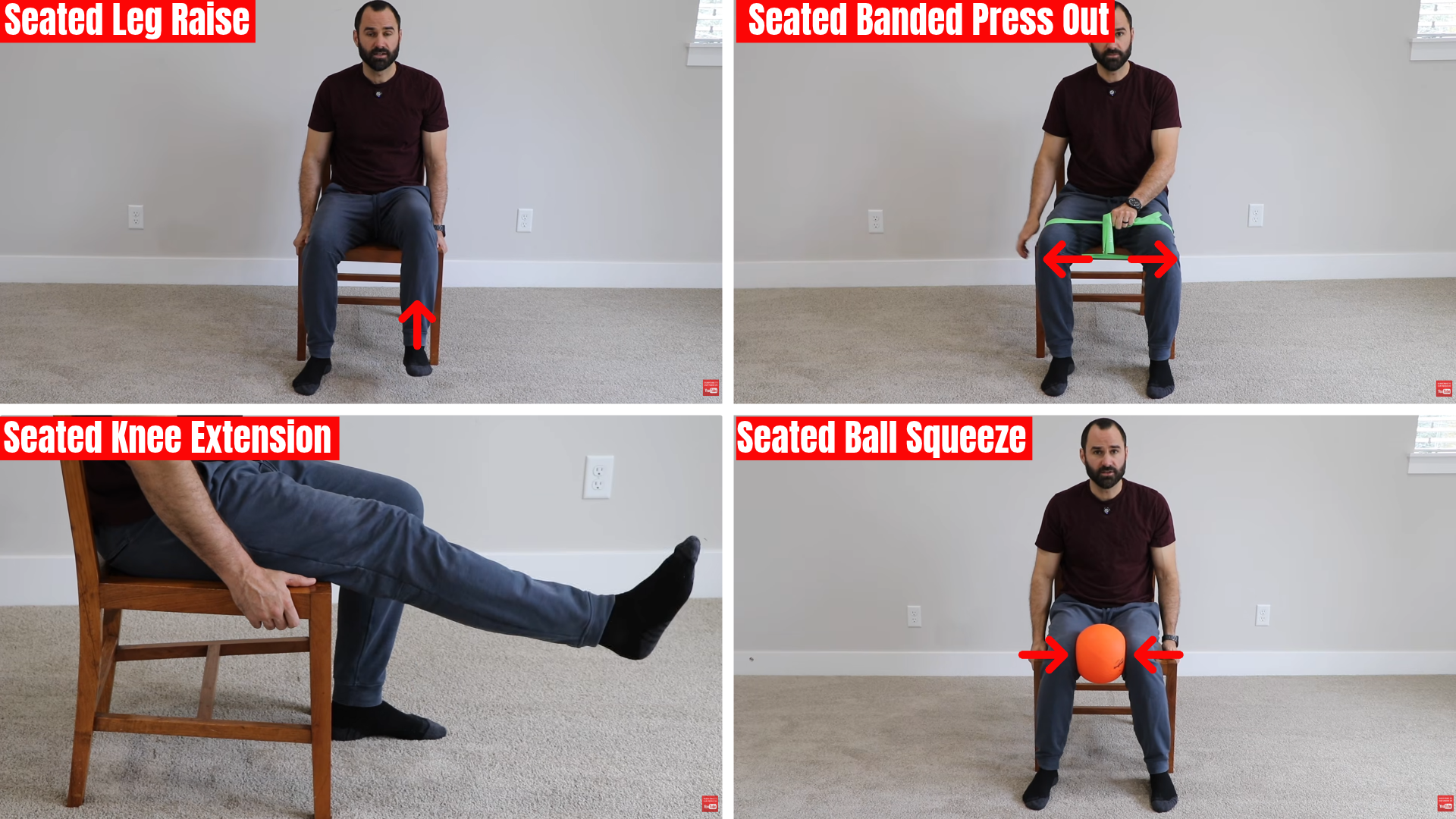
Seated Leg Raises: Sit upright in a chair and slowly straighten one knee, lifting your foot until your leg is extended. Lower slowly and repeat. This exercise strengthens the quadriceps and helps support everyday activities such as walking and standing.
Seated Banded Press-Outs: Place a resistance band around your thighs, just above your knees. Gently press your knees outward against the band, hold briefly, and return to the starting position. This exercise targets the hip abductor muscles.
Seated Knee Extensions: Sit upright with your feet on the floor. Slowly straighten one knee, hold briefly, and lower with control. This exercise develops quadriceps strength, which is important for supporting the hip and lower extremity during functional activities.
Seated Ball Squeezes: Place a soft ball or pillow between your knees. Gently squeeze your knees together, hold for several seconds, and relax. This exercise activates the hip adductor muscles.
 Click this video to follow along with the Level 1 Exercises.
Level 2: Supported Standing Strength & Hip Control
Once you can comfortably perform the Level 1 exercises, it is time to introduce standing movements. Level 2 focuses on strengthening the muscles around the hip while gradually improving balance, coordination, and weight-bearing tolerance.
These exercises begin to replicate the demands placed on your hips during everyday activities such as walking, climbing stairs, and standing.
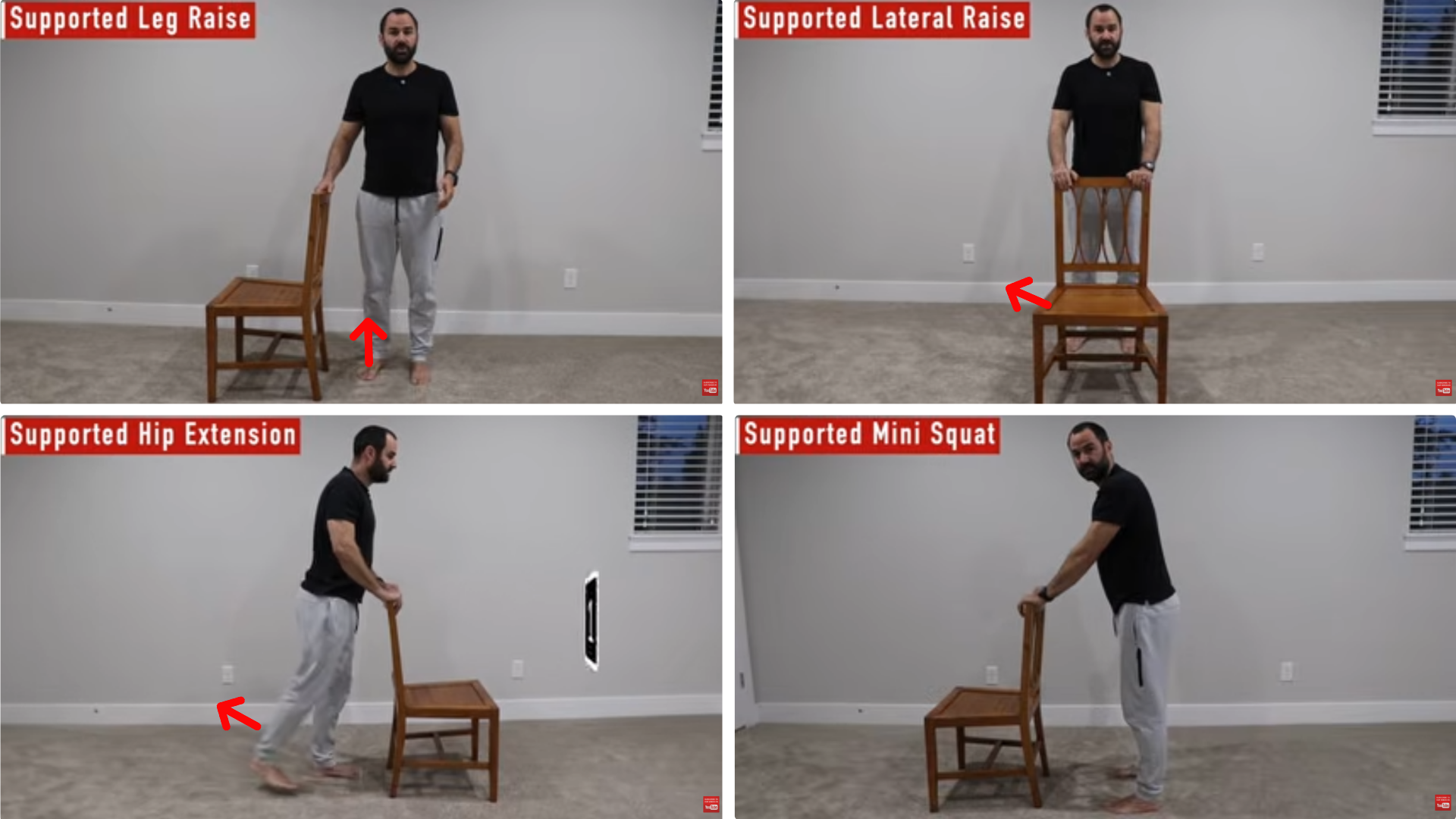
Supported Leg Raise: Stand upright while holding onto a sturdy chair or countertop. Slowly lift one leg forward without leaning backward or arching your lower back. Return slowly to the starting position.
Supported Lateral Leg Raise: Hold onto a stable support and slowly move one leg out to the side. Keep your toes pointing forward and avoid leaning your trunk. This exercise targets the hip abductor muscles.
Supported Hip Extension: Stand tall while holding onto a chair or countertop. Slowly move one leg backward without arching your lower back or rotating your pelvis. Return to the starting position with control.
Supported Mini Squat: Stand with your feet approximately shoulder-width apart while holding onto a stable support. Slowly bend your knees and hips into a shallow squat, then return to standing.
Click this video to follow along with the Level 2 Exercises.
Level 3: Functional Strength & Dynamic Stability
Level 3 introduces more challenging exercises that closely resemble everyday movements. The focus is on improving functional leg strength, balance, and the ability to control your hips during single-leg and transitional movements.
These exercises are particularly important for improving activities such as getting out of a chair, maintaining balance while walking, and supporting your body weight on one leg.
Supported Step-Ups – Forward: Stand in front of a low step while holding onto a railing or sturdy support. Step up with one leg, straighten your knee and hip, and slowly step back down. Start with a low step and progress as tolerated.
Supported Step-Ups – Lateral: Stand beside a low step. Step sideways onto the step with the nearer leg, bring the opposite foot up, and slowly return to the starting position. Use hand support as needed.
Chair Stand-Ups: Sit in a sturdy chair with your feet positioned approximately shoulder-width apart. Lean forward slightly and push through your feet to stand upright. Slowly lower yourself back into the chair. This is an important functional exercise for improving the strength needed to get up from a seated position.
Supported Single-Leg Stance: Stand upright while holding onto a countertop or sturdy support. Slowly shift your weight onto one leg and lift the opposite foot slightly off the floor. Maintain an upright posture and keep your pelvis level. Hold for 10–30 seconds before switching legs.
Click this video to follow along with the Level 3 Exercises.
How to Progress Your Hip Osteoarthritis Exercises
The key to successful hip osteoarthritis rehabilitation is gradual progression. You do not need to rush through the levels.
Start with exercises you can perform comfortably and focus on controlled movement rather than speed or heavy resistance.
As your strength and tolerance improve, gradually increase repetitions, resistance, or exercise difficulty.
A little temporary discomfort during exercise can be acceptable, but significant pain or symptoms that remain noticeably worse afterward are signs that you may need to reduce the intensity or modify the exercise.
Remember: Consistency is more important than intensity. Regular strengthening and movement can help improve your ability to manage hip osteoarthritis and maintain an active lifestyle.
For more information and guided exercise demonstrations, visit the Performance Sport & Spine YouTube Channel and explore our progressive Hip Osteoarthritis Exercise Program.
About the Author
Dr. Greenwade, DC, MS is an evidence-based sports chiropractor, movement specialist, and the founder of Performance Sport & Spine, serving patients across the Eastside in Redmond and Seattle. Holding a Master of Science in sports medicine alongside a Doctorate of Chiropractic, Dr. Greenwade specializes in modern physical medicine, progressive loading, and active, movement-based recovery. The clinic’s mission is to help active individuals and office professionals resolve acute and chronic musculoskeletal conditions without unnecessary injections, medications, or surgeries.
Medical Disclaimer: The information provided in this article, including text, graphics, images, and other material, is for educational and informational purposes only. It is not intended to be a substitute for professional medical advice, diagnosis, or treatment. Always seek the advice of a qualified healthcare provider with any questions you may have regarding a medical condition or treatment plan.


