

Hip Impingement (FAI): Symptoms, Diagnosis, Exercises & Treatment
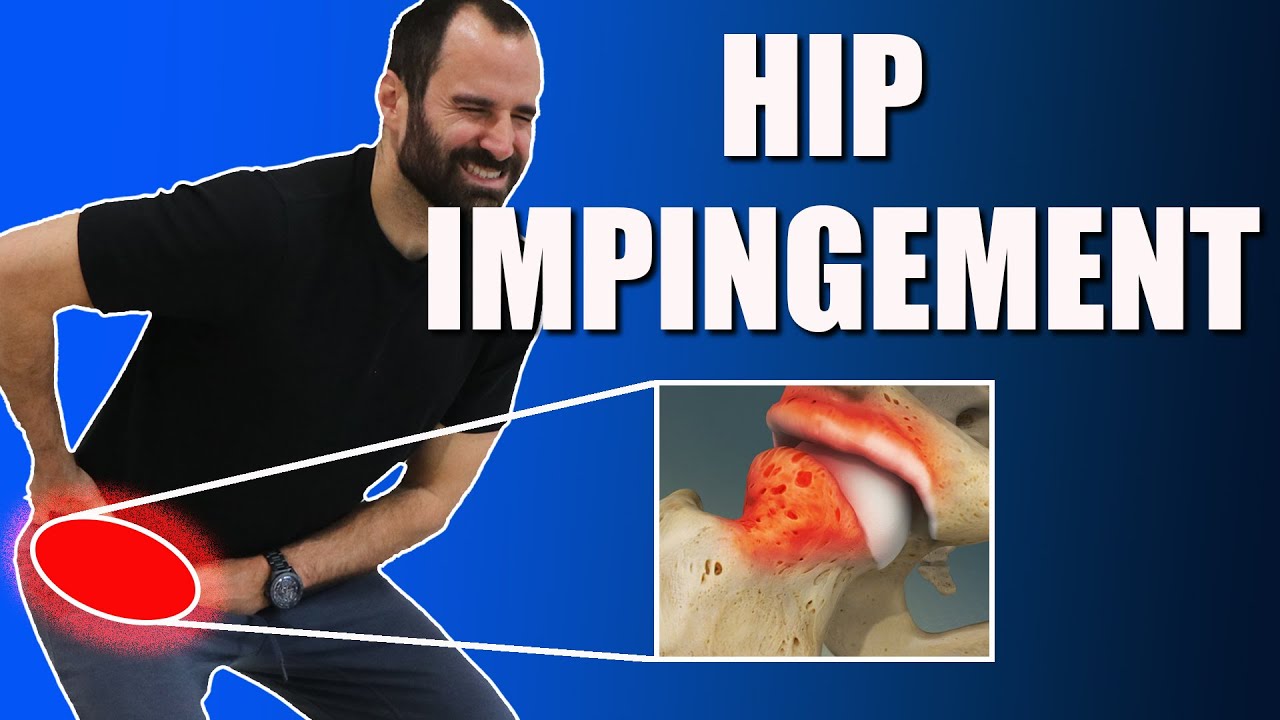
Femoroacetabular impingement (FAI), commonly known as hip impingement, occurs when abnormal mechanical contact develops between the ball and socket of the hip joint. This motion-related condition can cause deep groin pain, hip stiffness, and difficulty with activities such as squatting, running, and prolonged sitting.
At Performance Sport & Spine, we utilize a progressive rehabilitation approach designed to improve hip strength, mobility, joint stability, and functional performance.
What Causes Hip Impingement?
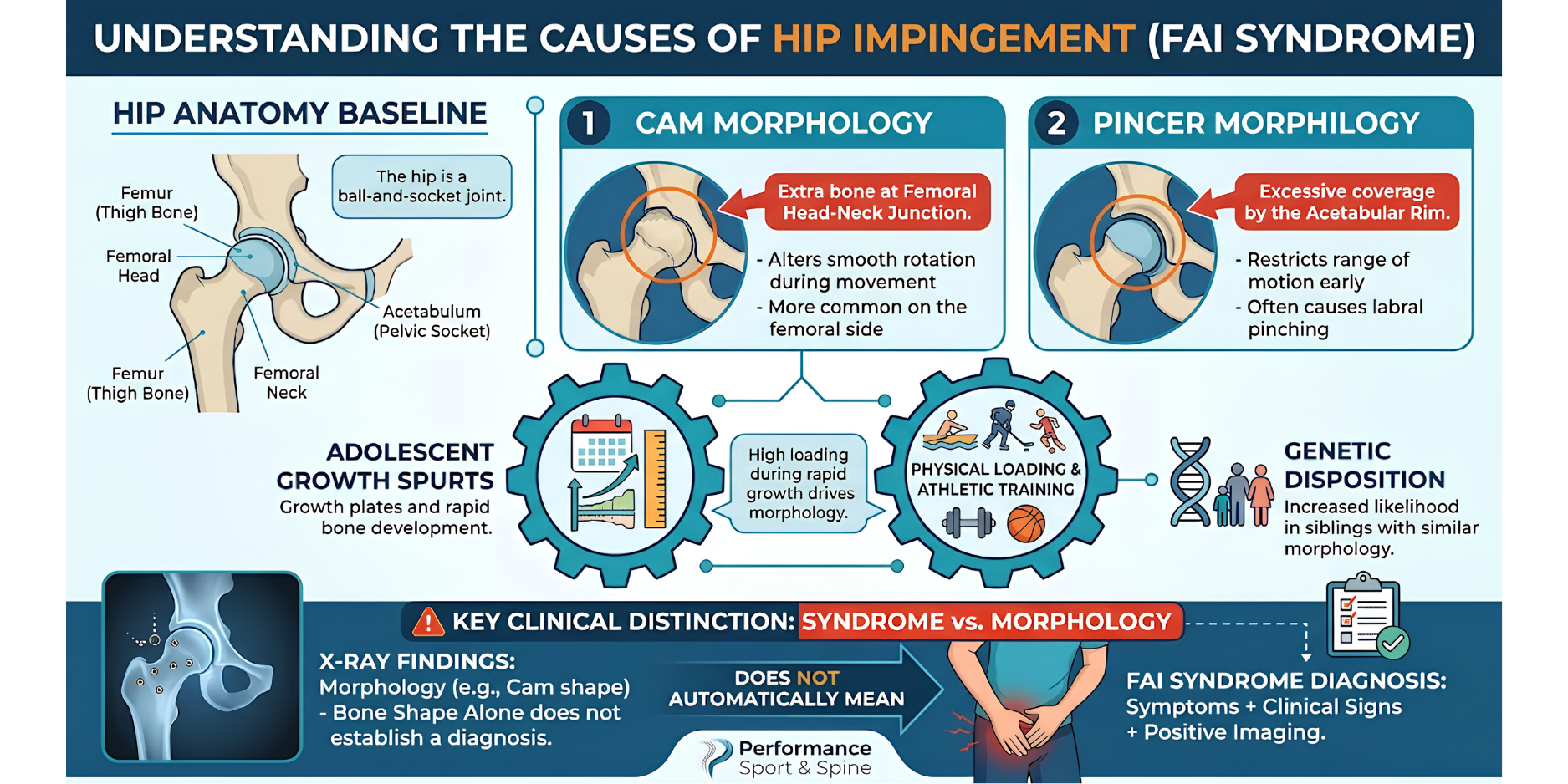
The hip is a ball-and-socket joint formed by the acetabulum (pelvic socket) and the femoral head and neck (thigh bone). FAI is associated with two primary types of bony morphology:
- Cam Morphology: Extra bone formation or an altered contour along the femoral head-neck junction.
- Pincer Morphology: Excessive bony coverage of the femoral head by the acetabular rim.
These morphological changes typically develop during adolescent growth spurts, particularly in individuals exposed to high physical loading and athletic training volumes. Genetics also plays a role, with siblings of individuals with cam morphology having an increased likelihood of developing similar anatomical characteristics.
Key Clinical Distinction: Having cam or pincer morphology on an X-ray does not automatically mean you have FAI syndrome. Bone shape alone does not establish a clinical diagnosis.
 What Does Hip Impingement Feel Like?
Symptomatic FAI typically presents with several subjective complaints and functional limitations:
-
Primary Symptom: Deep, aching groin pain triggered by hip flexion, squatting, sprinting, or prolonged sitting.
-
Stiffness & Mechanical Signs: Hip stiffness, restricted range of motion (especially internal rotation), limited squat depth, and joint popping, snapping, or clicking.
-
Posterior & Bilateral Involvement: Pain can occur in both hips or present as buttock/posterior hip pain, often linked to labral pathology.
-
Functional Deficits: Reduced hip strength, impaired core/pelvic stability, shorter walking stride length, and altered movement mechanics.
Don’t Let Hip Pain Hold You Back!
Experiencing groin pain or hip stiffness? Let Performance Sport & Spine help you find the cause and get back to moving comfortably.
How Is Hip Impingement Diagnosed?
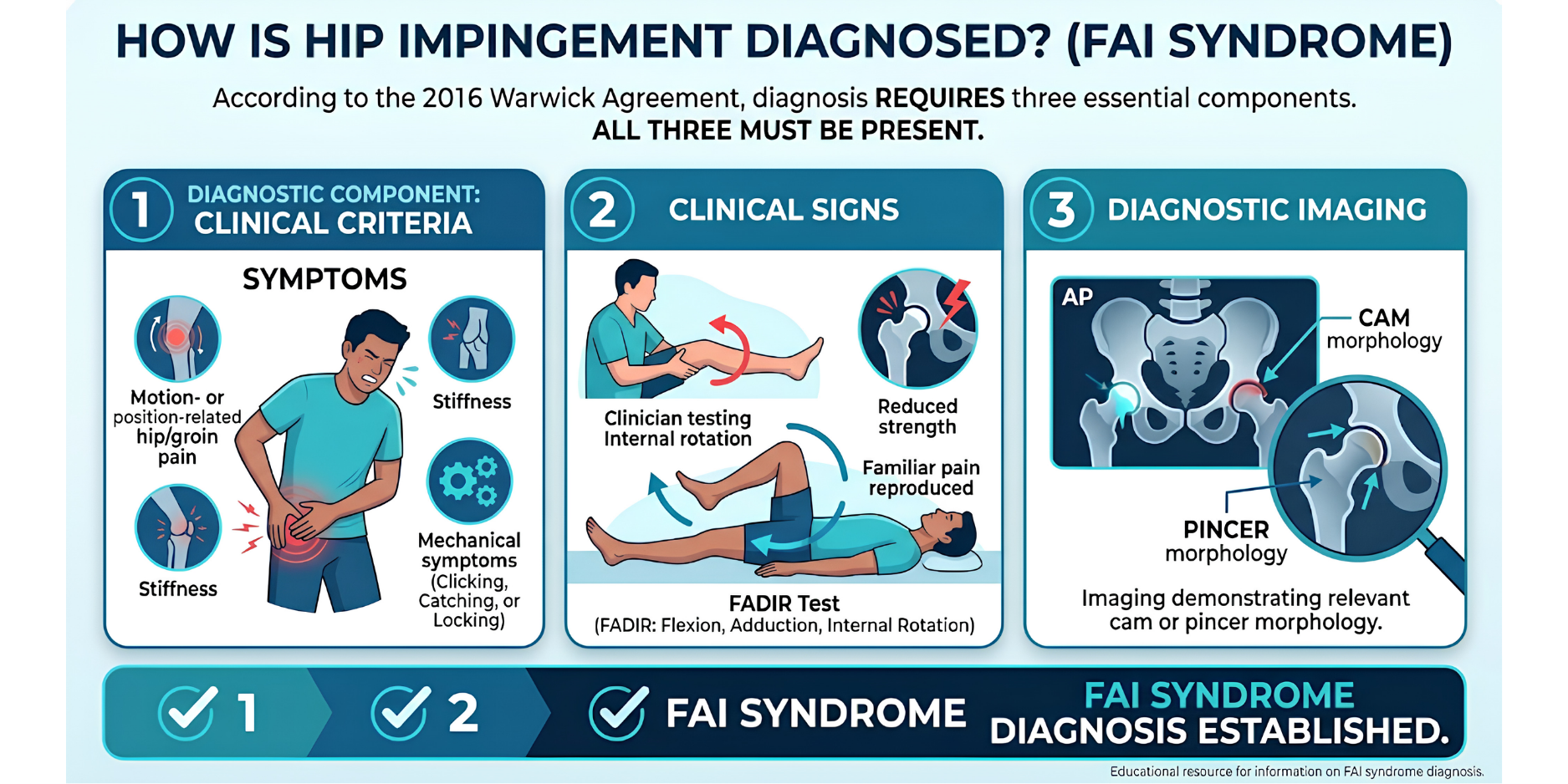
According to the 2016 Warwick Agreement, an international consensus statement on femoroacetabular impingement syndrome, diagnosis requires three essential components. All three must be present to establish FAI syndrome.
| Diagnostic Component | Clinical Criteria |
|---|---|
| 1. Symptoms | Motion- or position-related hip/groin pain, stiffness, or mechanical symptoms such as clicking, catching, or locking. |
| 2. Clinical Signs | Restricted range of motion, particularly internal rotation, reduced strength, and familiar pain reproduced during provocative testing, such as the FADIR test (Flexion, Adduction, Internal Rotation). |
| 3. Diagnostic Imaging | Imaging demonstrating relevant cam or pincer morphology. |
Imaging Protocols & Differential Diagnosis
First-Line Imaging: Anteroposterior (AP) pelvis and 45-degree Dunn lateral X-ray views are commonly used to evaluate hip morphology and identify cam or pincer changes.
Advanced Imaging: MRI or MR arthrography may be used when detailed assessment of the labrum or articular cartilage is necessary. CT provides detailed visualization of bone anatomy but involves radiation exposure.
Ruling Out Other Causes: Clinicians should consider lumbar spine referral or radiculopathy, hip flexor tendinopathy, adductor strains, abdominal or inguinal-related pain, and pubic symphysis disorders. Red flags, including suspected fractures, avascular necrosis, infections, or tumors, require appropriate medical investigation.
Don’t Let Hip Pain Hold You Back!
Experiencing deep groin pain, hip stiffness, or discomfort with exercise? At Performance Sport & Spine, we’ll help identify the cause and create a personalized plan to get you moving better.
Ready to get back to doing what you love?
[SCHEDULE AN APPOINTMENT TODAY →]
Progressive Rehabilitation Framework
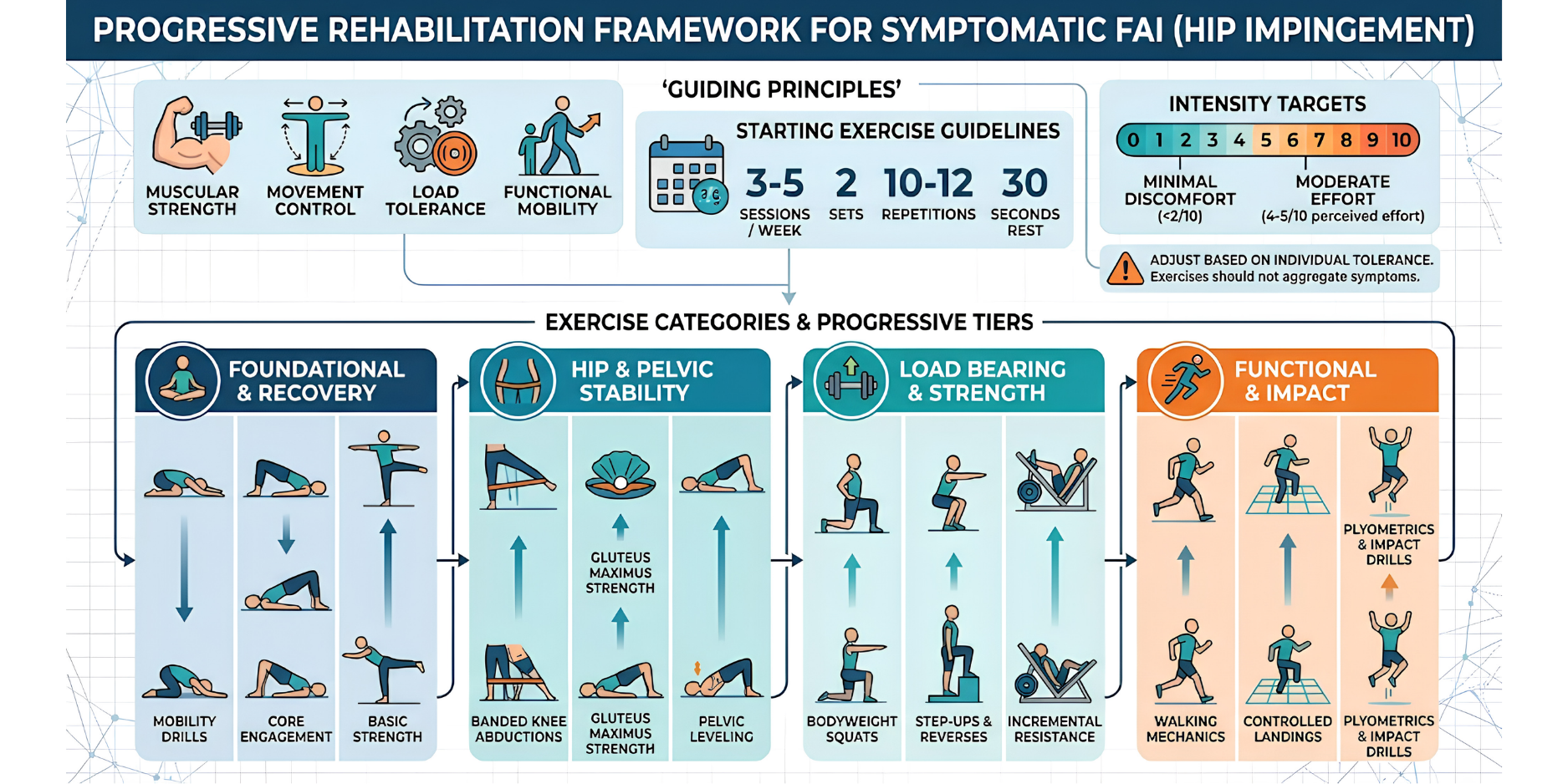
Conservative physical therapy is generally recommended as the first-line intervention for symptomatic FAI. Rehabilitation focuses on improving muscular strength, movement control, load tolerance, and functional mobility rather than attempting to change the underlying bone structure.
Starting Exercise Guidelines: 3–5 sessions per week, 2 sets of 10–12 repetitions, with approximately 30 seconds of rest between sets. These guidelines should be adjusted according to individual tolerance, recovery, and exercise difficulty.
Intensity Targets: Aim for minimal discomfort (approximately 2/10 or less) and moderate perceived effort (4–5/10). Exercises should not consistently aggravate symptoms.
Exercise Categories & Progressive Tiers
Rehabilitation progresses systematically from foundational strengthening of the hip adductors, abductors, extensors, and core toward unilateral loading, dynamic stability, and plyometrics. Programs utilize targeted movements like banded bridges, single-leg hinges, side planks, and multi-directional hopping while avoiding lumbar compensation or painful pinching. Ultimately, all progression should be driven by individual symptom response and movement quality rather than a rigid timeline.
Lifelong Progression: From Adolescence to Osteoarthritis
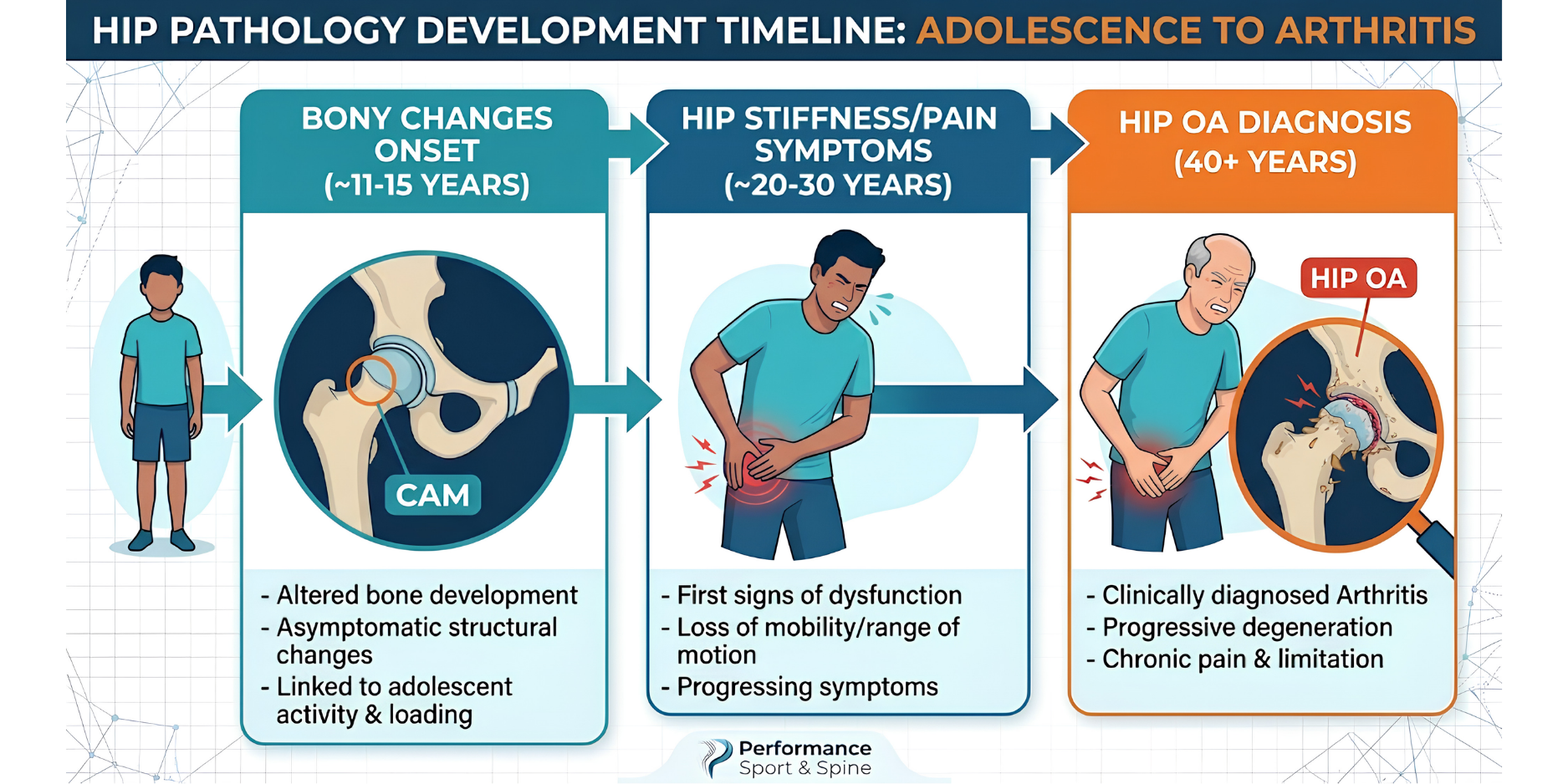
Skeletal changes like cam and pincer morphology typically develop during early adolescence (~11–15 years old) during periods of rapid growth and athletic loading. These structural changes remain largely asymptomatic until young adulthood (~20–30 years old), when hip stiffness, restricted internal rotation, and groin pain first manifest. Left unmanaged, chronic mechanical wear can gradually progress to joint degeneration and diagnosable hip osteoarthritis in later decades (40+ years old).
Surgical Considerations & Prognosis
Surgery is not an immediate requirement for FAI. Hip arthroscopy, which may involve reshaping the bone and addressing associated labral pathology, should be a shared decision between the patient and healthcare provider. It is generally considered when meaningful symptoms and functional limitations persist despite appropriate conservative rehabilitation.
Research comparing arthroscopic surgery with structured physical therapy demonstrates that both approaches can improve pain and function. However, outcomes vary between individuals, and surgery does not guarantee complete symptom resolution or prevention of future osteoarthritis.
The most important consideration is finding the appropriate treatment approach based on symptoms, functional limitations, sporting demands, and individual goals.
Take the Next Step Toward Stronger Hips!
Deep groin pain and hip stiffness don’t have to limit your training or daily activities. Getting an accurate diagnosis based on the Warwick Agreement criteria and following a structured, progressive rehabilitation program can help restore function, improve strength, and build more resilient hips.
Ready to improve your hip mobility and get back to doing what you love?
▶️ WATCH OUR COMPLETE HIP IMPINGEMENT REHABILITATION VIDEO to see these progressive exercises demonstrated with step-by-step instructions, proper technique, and clinical cues.
Don’t just work around your hip pain. Start building stronger hips and better movement today!
Schedule an appointment with Performance Sport & Spine to take the first step toward your recovery.
Educational Disclaimer: This article is for informational purposes only and does not substitute for an individualized clinical assessment, diagnosis, or treatment plan.
References
- Griffin, D. R., et al. (2016). The Warwick Agreement on femoroacetabular impingement syndrome (FAI syndrome): An international consensus statement. British Journal of Sports Medicine, 50(19), 1169–1176.
- Mallets, E., et al. (2019). Short-term outcomes of conservative treatment for femoroacetabular impingement: A systematic review and meta-analysis. International Journal of Sports Physical Therapy, 14(4), 514–524.
- Reiman, M. P., et al. (2013). Diagnostic accuracy of clinical tests of the hip: A systematic review with meta-analysis. British Journal of Sports Medicine, 47(14), 893–902.


