

Outer Hip Pain Keeping You From Running, Getting Dressed, or Sleeping Comfortably?
Does This Sound Familiar?
If outer hip pain is disrupting your day, you’re not alone.
Gluteal tendinopathy can make everyday activities painful, especially when your hip is exposed to repeated or increased loading.
You may have gluteal tendinopathy if you experience:
-
Pain on the outside of your hip with walking, running, or exercise
-
Pain when lying on your affected side
-
Discomfort with hills or stairs
-
Pain when standing on one leg
-
Symptoms that improve with rest but return when activity increases Grimaldi et al. (2017)

What Causes Gluteal Tendinopathy?
Gluteal tendinopathy typically develops due to excessive compression or overload of the gluteal tendons. Some common contributing factors include.
- Repetitive movements that strain the hip tendons
- Combination of high tensile and compressive load i
- Poor biomechanics in activities like walking or running
- Hip anatomy, hormonal, metabolic & genetic factors Grimaldi et al. (2024)
How We Assess Gluteal Tendinopathy
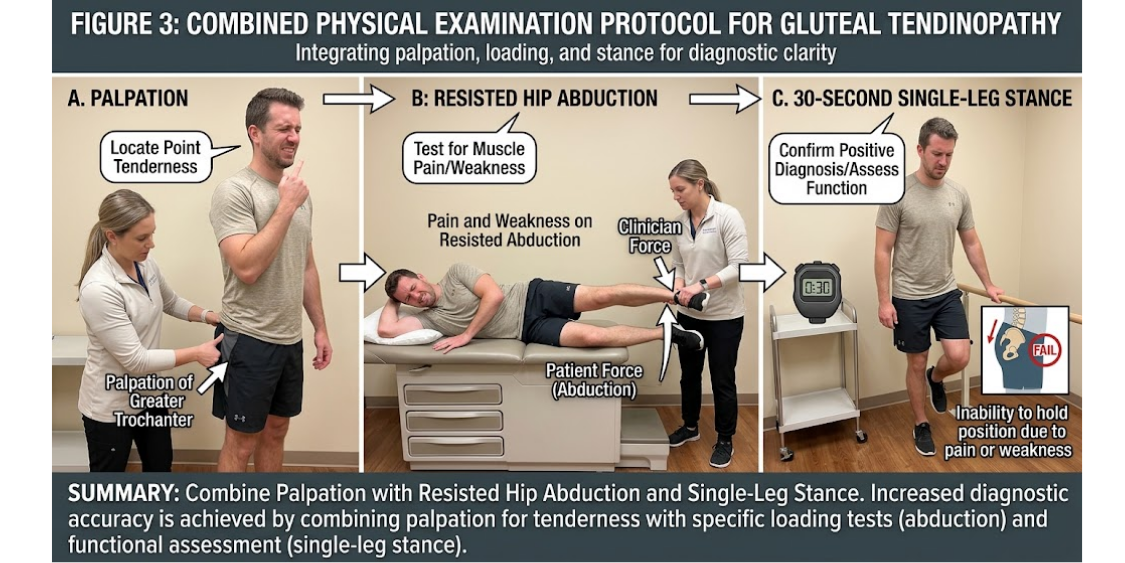
Lateral hip pain can have several causes, so an accurate assessment is an important first step. We evaluate your symptoms, hip strength, movement patterns, and relevant clinical tests to help identify what may be contributing to your pain. When appropriate, we also assess the lower back and other potential sources of referred pain.
We look at how your hip responds to different movements and loads to understand what you can currently tolerate and where to begin. This allows us to develop an individualized treatment plan based on your symptoms, goals, and activity demands.
 The good news?
You don’t necessarily need to stop moving or avoid the activities you enjoy.
The goal is to find the right balance between managing irritation and progressively rebuilding your hip’s ability to tolerate the demands of your everyday life and activities.
Patient Success Stories
“I suffered from what I now know to be gluteal tendinopathy for over a year. I had been to 3 different physical therapists without positive results and felt like I was at the end of my rope. Dr. Zach’s approach to tendinopathy and load management was completely different. His explanation made so much sense, and within weeks my pain decreased significantly. I finally feel strong, supported, and back in control!” Amy S
Why Does Your Pain Keep Coming Back?
It’s not always as simple as having a “weak glute.”
Your symptoms can be influenced by several factors, including:
- Changes in your activity level (Load management issues)
- Sudden increases in running, walking, or training
- Not addressing metabolic, systemic or genetic factors
- Positions that place additional compression around the outside of the hip
- Strength deficits in the glutes and hips
The key is identifying what’s driving the overload.
This approach is supported by clinical research. A randomized clinical trial of 204 people with gluteal tendinopathy found that education combined with targeted exercise produced greater improvement and lower pain than a wait-and-see approach at 8 weeks, with benefits maintained at 52 weeks. LEAP TRIAL
How We Treat Gluteal Tendinopathy
1. Understand What’s Irritating Your Hip
Start with the right diagnosis and strategy.
We’ll evaluate your symptoms, movement, strength, daily activities, training habits, and the demands you’re placing on your hip.
From there, we’ll identify the factors that may be contributing to your symptoms and develop a plan around your specific goals.
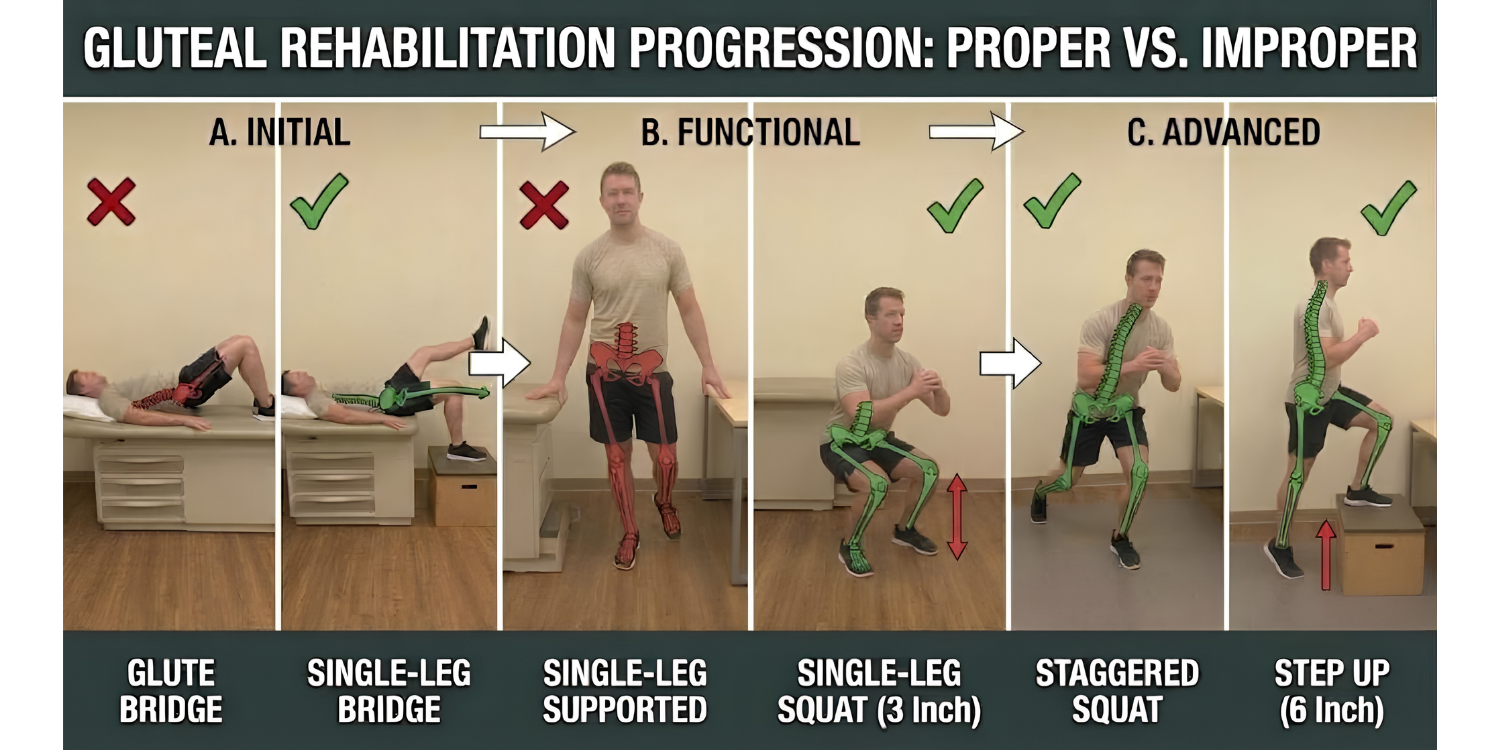
Example: Progressive rehabilitation program
Goal: Calm symptoms while maintaining muscle activation.
-
Isometric hip abduction against a wall: 4–5 × 30–45 seconds.
-
Double-leg glute bridges: 3 × 10–12.
-
Comfortable walking on flat ground in short bouts.
Progression criterion: Exercises are controlled, feel safe and easy to perform and pain returns to baseline by the following morning.
 2. Reduce Unnecessary Irritation
Keep moving while managing the load.
You Don’t Necessarily Need Complete Rest
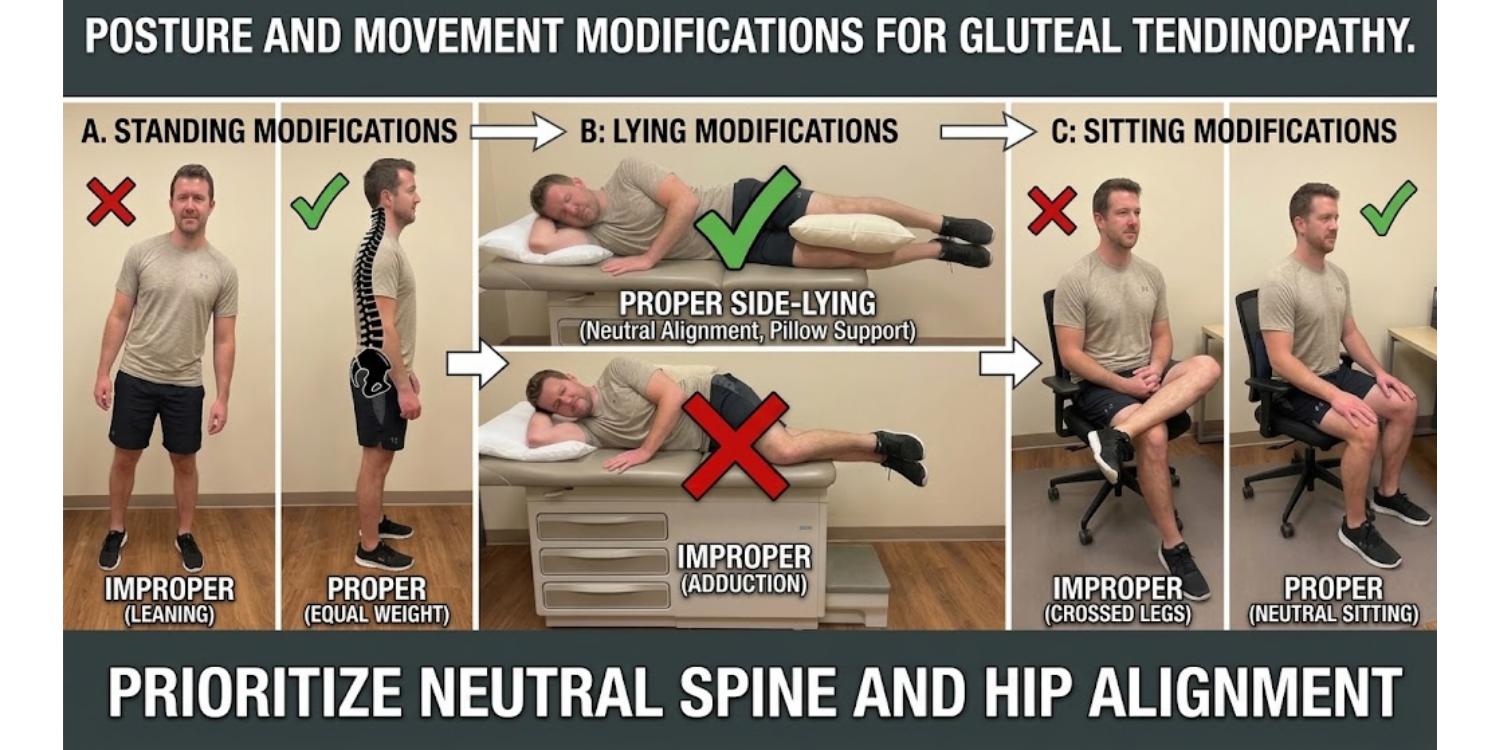
We’ll help you modify aggravating activities, positions, and training loads while keeping you active.
This may include adjusting running, walking, training volume, or sleeping positions.
The goal isn’t to avoid loading your hip—it’s to find the right load to support recovery and gradually rebuild your tolerance.
3. Progressively Build Strength
Increase what your hip can handle.
As your symptoms become more manageable, we’ll progressively challenge the muscles and tendons around your hip.
Your program may include isometric exercises, strengthening exercises, and progressively heavier resistance depending on your current capacity and goals. Bremer et al. 2025
The exact exercises aren’t the point. Mellor et al. (2018)
Progression is.
We’ll gradually increase the demands on your hip as your strength and tolerance improve.
4. Return to Your Activities
Build toward real-world demands.
Rehabilitation shouldn’t stop simply because your hip feels better during basic exercises.
We’ll progressively prepare you for the activities you actually want to do.
That might mean:
- Running
- Hiking
- Lifting
- Sports
- Walking longer distances
- Climbing stairs
- Returning to your normal workouts
The goal is to help you build the confidence and physical capacity to handle the activities that matter to you.
The Stoplight Rule & 24-Hour Response
🟢 Green (0–2/10 pain): Continue if pain stays mild and your movement remains controlled.
🟡 Amber (3–4/10 pain): Modify the exercise by reducing resistance, repetitions, or range of motion if symptoms increase.
🔴 Red (5+/10, sharp or worsening pain): Stop or significantly reduce the load.
Check your 24-hour response: Symptoms should return to baseline by the next morning. If pain or everyday activities are noticeably worse, reduce the next session’s load. Progress gradually only when exercise is well tolerated and recovery is good.
Pain scores are guidelines, not strict cutoffs. Your overall symptoms and function matter most.
Measurable Rehabilitation Milestones
Track progress using clear, functional goals:
- Hip-abductor strength: Gradually increase resistance while maintaining good technique and minimal symptom aggravation.
- Walking tolerance: Progress from 15 to 30–45 minutes without a significant increase in pain the following day.
- Single-leg control: Perform 10 controlled step-downs with good pelvic stability and minimal pain.
- Return to sport: Gradually reintroduce running, hills, or heavier lifting when strength, control, and symptom response support progression.
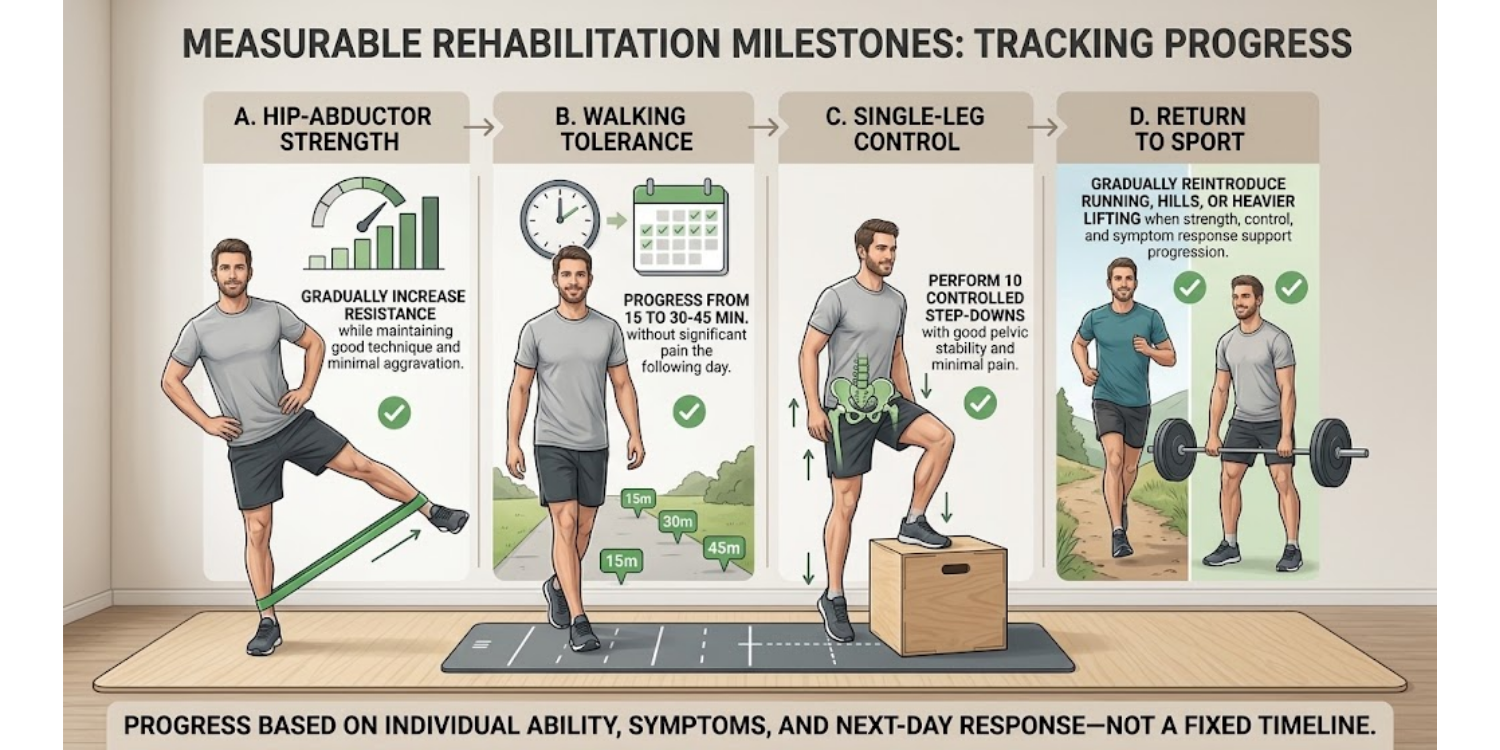 Progress based on individual ability, symptoms, and next-day response—not a fixed timeline.
What to Expect at Your First Appointment
Not sure if we’re the right fit for your hip pain? Your first visit is designed to help you understand what’s causing your symptoms and what you can do about them.
1. Understand your symptoms
We’ll discuss where your pain occurs, when it started, what aggravates it, and how it’s affecting your sleep, exercise, and daily activities.
2. Get a thorough assessment
We’ll assess your hip strength, movement, tolerance to loading, and the activities that reproduce your symptoms. When appropriate, we’ll also consider other possible causes of hip or back pain.
3. Understand what’s driving your pain
We’ll explain our findings in plain language, including whether your symptoms are consistent with gluteal tendinopathy and which factors may be contributing to your pain.
4. Leave with a plan
You’ll receive an individualized plan that may include activity modifications, targeted exercises, and a progressive strategy for returning to running, walking, strength training, or other activities that matter to you.
Take the First Step Toward Better Hip Function
You don’t need to stop being active indefinitely or figure this out on your own. Let’s identify what’s contributing to your pain and build a plan to help you move forward with confidence.
[Book Your Initial Evaluation]
Frequently Asked Questions
Do I need to stop running or working out completely?
Not necessarily.
Complete rest isn’t always required. Depending on your symptoms, we may modify your training volume, frequency, intensity, terrain, or other variables while progressively rebuilding your hip’s capacity.
We’ll help you determine what level of activity is appropriate for you and how to progressively rebuild your hip’s capacity
Is gluteal tendinopathy the same as hip bursitis?
Not exactly.
Gluteal tendinopathy involves the tendons of the gluteus medius and gluteus minimus. Outer hip pain can also involve the surrounding tissues, including the bursae, and these conditions can produce overlapping symptoms.
The term “hip bursitis” has historically been used to describe many cases of outer hip pain. A thorough evaluation can help determine what’s contributing to your symptoms.
How long does gluteal tendinopathy take to improve?
Everyone is different.
Your timeline can depend on how long you’ve had symptoms, your current activity level, the severity of your symptoms, and how much load your hip can currently tolerate.
Rather than focusing on an arbitrary timeline, we’ll help you establish appropriate milestones and progressively work toward your goals.
What exercises help gluteal tendinopathy?
Strengthening exercises are an important part of rehabilitation, but there isn’t one exercise that works for everyone.
Your program should be based on your current strength, symptoms, activity demands, and goals.
As your capacity improves, your exercises and the amount of resistance can progress with you.
Can I sleep on my side?
Side-lying can aggravate symptoms for some people because of the pressure placed around the outside of the hip.
Your physical therapist can help you identify comfortable sleeping positions and strategies for reducing unnecessary irritation while your hip becomes more tolerant to load.
Do I need an MRI?
Not necessarily.
Many cases of gluteal tendinopathy can be assessed clinically through your history and physical examination. Imaging may be appropriate in certain situations when additional information is needed.
Your evaluation will help determine whether further testing is warranted.
Ready to Get Back to Doing What You Love?
Stop guessing. Start rebuilding.
You don’t have to figure out persistent hip pain on your own.
At Performance Sport & Spine, we’ll help you understand what’s contributing to your symptoms and create a clear, progressive plan designed around your goals.
Whether you want to get back to running, hiking, lifting, sports, or simply moving comfortably through your day, we’re here to help you move forward.
Performance Sport & Spine
 Call Us: (425) 896-7151
 Location: Redmond, WA
 Email: info@performancesportspine.com
References
Bremer, T., Nicklen, P., Fearon, A., & Morrissey, D. (2025). The efficacy of gluteal tendinopathy treatments: A systematic review. Clinical Rehabilitation, 39(5), 600–617. https://doi.org/10.1177/02692155251318204
Grimaldi, A., Mellor, R., Nicolson, P., Hodges, P., Bennell, K., & Vicenzino, B. (2017). Diagnostic utility of clinical tests for gluteal tendinopathy in patients presenting with lateral hip pain. British Journal of Sports Medicine, 51(6), 519–524. https://doi.org/10.1136/bjsports-2016-096388
Grimaldi, A., Mellor, R., Nasser, A., Vicenzino, B., & Hunter, D. J. (2024). Current and future advances in practice: Tendinopathies of the hip. British Journal of Sports Medicine, 58(18), 1083–1090. https://doi.org/10.1136/bjsports-2023-107787
Mellor, R., Bennell, K., Grimaldi, A., Nicolson, P., Kasza, J., Hodges, P., Wajswelner, H., & Vicenzino, B. (2018). Education plus exercise versus corticosteroid injection use versus a wait and see approach on global outcome and pain from gluteal tendinopathy: Prospective, single blinded, randomised clinical trial (LEAP trial). BMJ, 361, Article k1662. https://doi.org/10.1136/bmj.k1662


