

Neck Pain Relief: Treatment, Rehabilitation & Exercises
Neck pain can interfere with everything from working at a computer to sleeping, driving, and exercising. Whether it develops after muscle strain, prolonged positioning, or another cause, finding lasting relief means addressing symptoms while rebuilding strength, movement, and confidence.
Research suggests that a combination of education, targeted exercise, and appropriate activity modifications can help many people manage neck pain. Manual therapy may provide additional benefits for some individuals, particularly when combined with exercise. However, no single treatment works best for everyone.
Here’s what the research says about neck pain relief, when to seek professional care, and how to get started with at-home exercises.
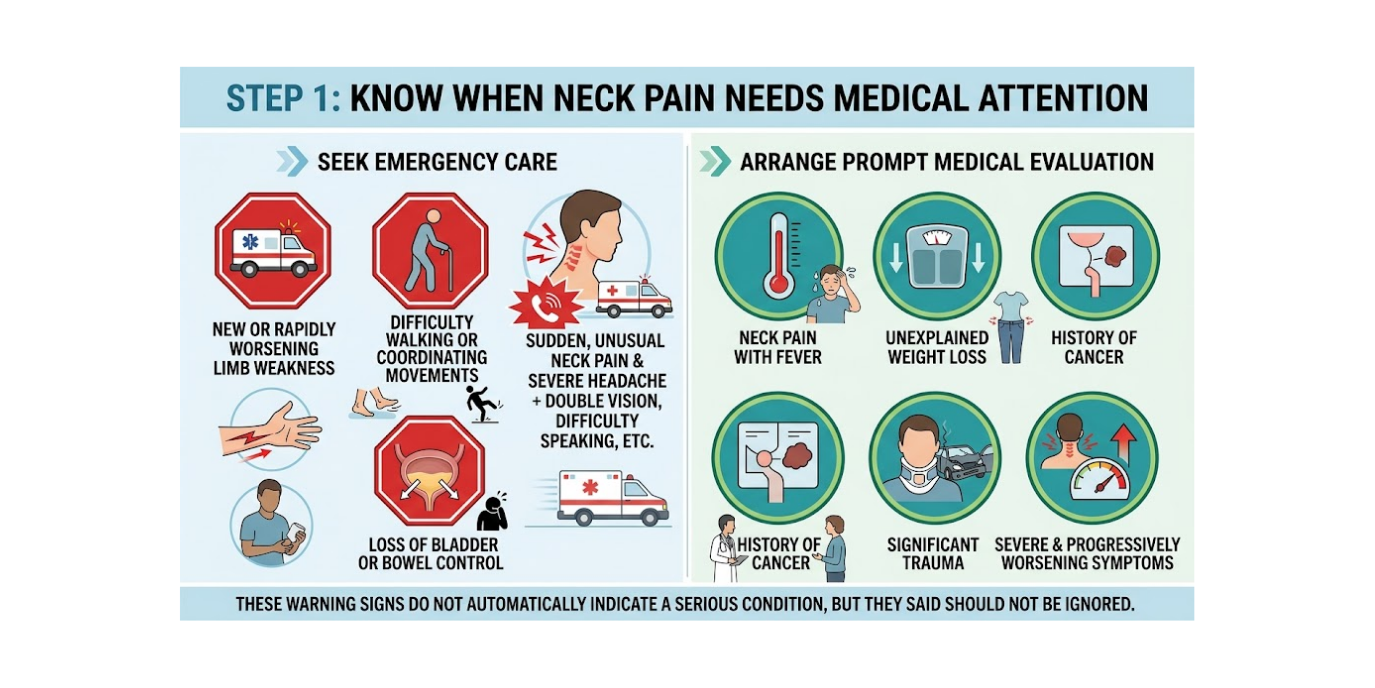
Step 1: Know When Neck Pain Needs Medical Attention
Most neck pain is not caused by a serious condition, but certain symptoms may indicate an underlying problem that requires prompt medical evaluation. Clinical practice guidelines recommend screening for warning signs of conditions such as spinal cord compression, infection, fracture, and cancer, although the evidence supporting individual red flags varies (Feller et al., 2024).
Seek emergency care for new or rapidly worsening limb weakness, significant difficulty walking or coordinating movements, or new loss of bladder or bowel control associated with neurological symptoms. Sudden, unusual neck pain or a severe headache accompanied by double vision, difficulty speaking, or other new neurological symptoms also requires emergency assessment.
Arrange prompt medical evaluation if neck pain occurs with fever, unexplained weight loss, a history of cancer, significant trauma, or severe and progressively worsening symptoms. These warning signs do not automatically indicate a serious condition, but they should not be ignored.
 Step 2: What Does the Research Say About Neck Pain Treatment?
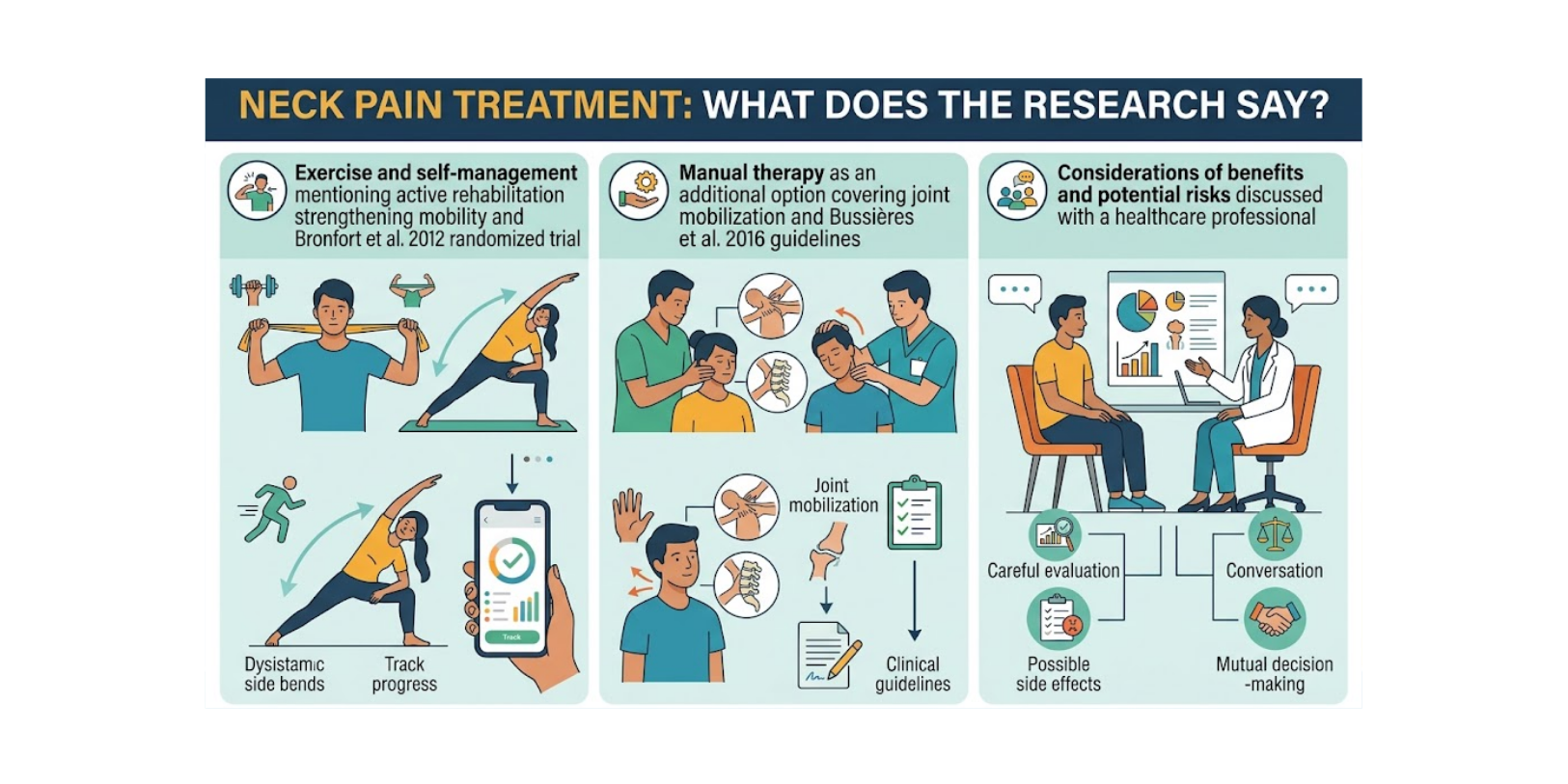
Exercise and self-management
Active rehabilitation is an important part of managing many types of nonspecific neck pain. Depending on your symptoms, treatment may include strengthening, mobility exercises, education, and gradually returning to everyday activities.
A randomized trial by Bronfort et al., published in Annals of Internal Medicine (2012), compared spinal manipulation, medication, and home exercise with advice in 272 adults with acute or subacute neck pain. Spinal manipulation and home exercise with advice both produced favorable outcomes compared with medication for some measures, while home exercise and advice achieved similar results to manipulation at most time points. The findings support active self-management as a reasonable treatment option, rather than establishing one universally superior approach.
Manual therapy as an additional option
Hands-on treatments, including joint mobilization and spinal manipulation, may help reduce symptoms for some people. Their benefits depend on the individual and how treatment is delivered.
The 2016 clinical practice guideline by Bussières et al., published in the Journal of Manipulative and Physiological Therapeutics, recommended multimodal care incorporating appropriate manual therapy, exercise, and education for selected patients with neck pain. A Cochrane systematic review by Gross et al. (2015) also found that cervical manipulation or mobilization may improve pain and function in some circumstances, although the certainty and consistency of evidence varied.
Together, these findings support considering manual therapy as an option alongside active rehabilitation—not as a necessary treatment for everyone. Cervical manipulation also carries potential risks, including rare but serious complications, which should be discussed with a qualified healthcare professional.
Step 3: Three Pillars of Effective Neck Care
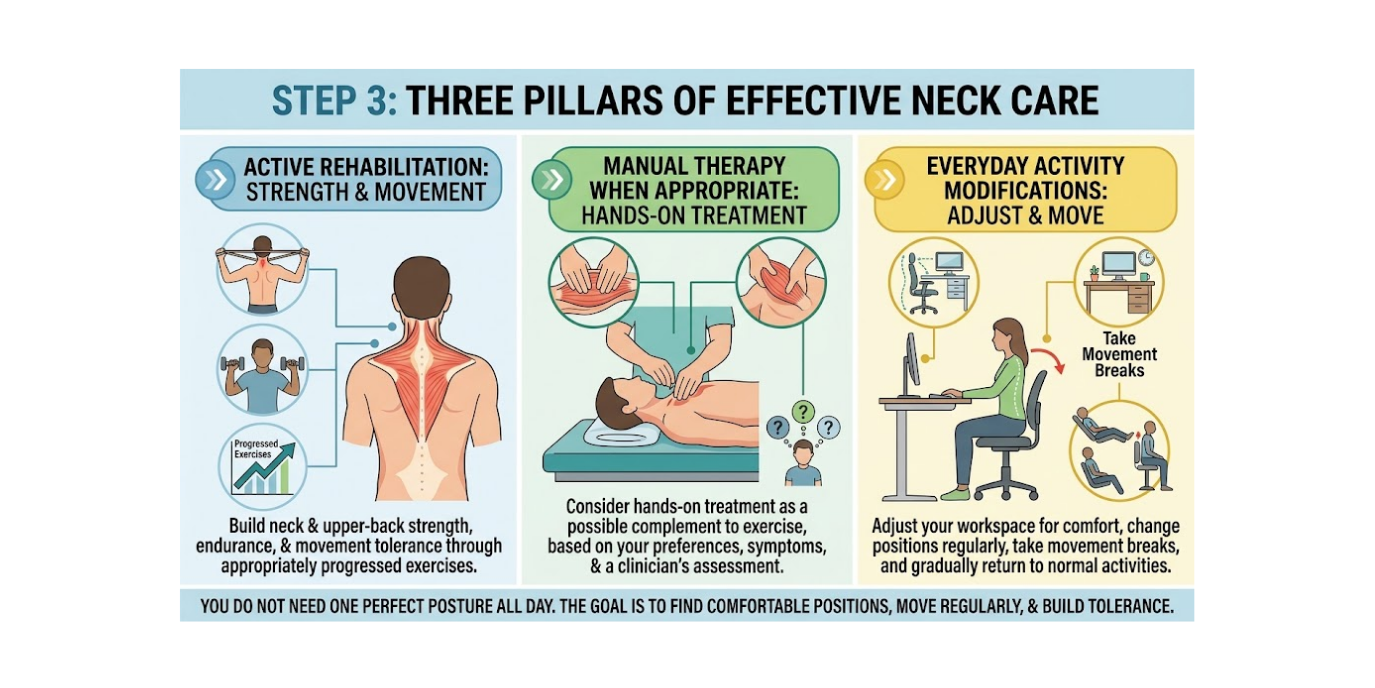
A practical approach to recovery focuses on three areas:
- Active rehabilitation: Build neck and upper-back strength, endurance, and movement tolerance through appropriately progressed exercises.
- Manual therapy when appropriate: Consider hands-on treatment as a possible complement to exercise, based on your preferences, symptoms, and a clinician’s assessment.
- Everyday activity modifications: Adjust your workspace for comfort, change positions regularly, take movement breaks, and gradually return to normal activities.
You do not need to maintain one perfect posture all day. The goal is to find comfortable positions, move regularly, and gradually build your tolerance for everyday demands.
Step 4: Six At-Home Exercises for Neck Pain
The right exercises depend on your symptoms, medical history, and current abilities. A suitable program may incorporate gentle neck movements, neck-control exercises, and strengthening for the shoulders and upper back.
Watch the video below for demonstrations of six at-home exercises.
Watch here: YouTube video — 6 At-Home Exercises for Neck Pain

Start gently and follow the video instructions. Use light resistance where appropriate, and avoid forcing movements or pushing through worsening pain. Stop if symptoms spread into your arm or you experience new numbness, weakness, dizziness, or other concerning symptoms.
If you have recently injured your neck, have a diagnosed cervical spine condition, or experience persistent or radiating symptoms, consult a qualified healthcare professional before starting the routine.
Ready to Find Relief From Neck Pain?
If neck pain is affecting your work, sleep, or daily activities, our team at Performance Sport & Spine can help you explore treatment options tailored to your symptoms and goals.
Call (425) 896-7151 or book an appointment to get started.
Performance Sport & Spine · Redmond, WA
For many people with uncomplicated neck pain, a combination of education, progressive exercise, and practical activity modifications can help improve comfort and function. Manual therapy may provide additional relief for some individuals, but the best approach depends on your circumstances.
Focus on gradual progress, stay appropriately active, and seek professional guidance when symptoms are concerning or recovery is not progressing as expected.
References
1. Bronfort et al. (2012) — Exercise, medication, and spinal manipulation
Bronfort G, Evans R, Anderson AV, Svendsen KH, Bracha Y, Grimm RH. Spinal manipulation, medication, or home exercise with advice for acute and subacute neck pain: a randomized trial. Annals of Internal Medicine. 2012;156(1 Pt 1):1–10.
https://doi.org/10.7326/0003-4819-156-1-201201030-00002
2. Bussières et al. (2016) — Clinical practice guideline
Bussières AE, Stewart G, Al-Zoubi F, et al. The treatment of neck pain-associated disorders and whiplash-associated disorders: a clinical practice guideline. Journal of Manipulative and Physiological Therapeutics. 2016;39(8):523–564.e27.
https://doi.org/10.1016/j.jmpt.2016.08.007
3. Gross et al. (2015) — Cochrane systematic review
Gross A, Langevin P, Burnie SJ, Bédard-Brochu MS, Empey B, Dugas E, et al. Manipulation and mobilisation for neck pain contrasted against an inactive control or another active treatment. Cochrane Database of Systematic Reviews. 2015;(9):CD004249.
https://doi.org/10.1002/14651858.CD004249.pub4
4. Feller et al. (2024) — Red flags for serious neck conditions
Feller D, Chiarotto A, Koes B, Maselli F, Mourad F. Red flags for potential serious pathologies in people with neck pain: a systematic review of clinical practice guidelines. Archives of Physiotherapy. 2024;14(1):105–115.
https://doi.org/10.33393/aop.2024.3245
5. Childress and Stuek (2020) — Initial evaluation and management
Childress MA, Stuek SJ. Neck pain: initial evaluation and management. American Family Physician. 2020;102(3):150–156.
https://www.aafp.org/afp/2020/0801/p150
Medical Disclaimer: This article is for general educational purposes only and does not constitute medical advice, diagnosis, or treatment. The information provided is not a substitute for an evaluation by a qualified healthcare professional. Exercise suitability varies by individual. Seek appropriate medical care for concerning symptoms, and consult a healthcare professional before beginning a new exercise program if you have an underlying condition or recent injury.


