

By Dr. Zach Greenwade, DC, MS | Published: September 21st, 2026
Lateral hip pain is one of the most frustrating, sleep-disrupting issues we see in clinical practice—and unfortunately, it gets misdiagnosed as “hip bursitis” or low back pain way too often. If you’ve been struggling with pain on the outside of your hip that worsens when you try to sleep or walk up stairs, you might actually be dealing with gluteal tendinopathy.
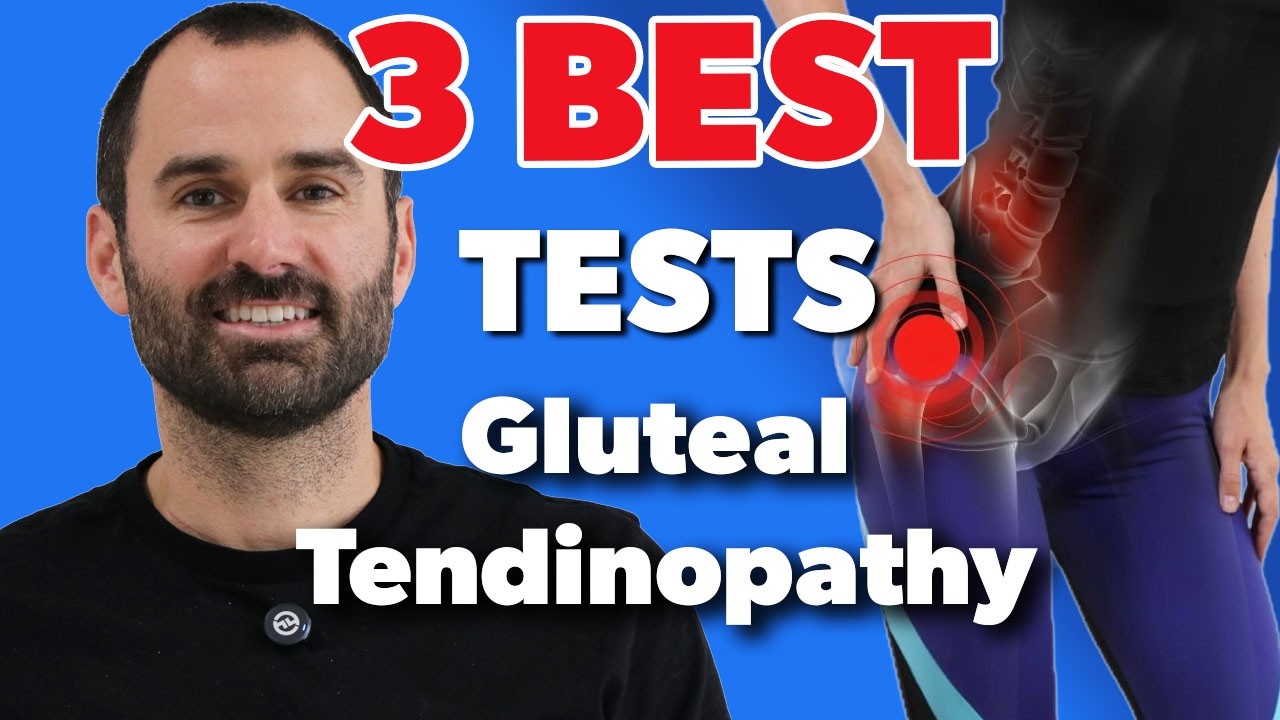
In this video, we break down the three precise, clinical tests you can perform right now to know if gluteal tendinopathy is the true source of your pain.
Watch the full step-by-step breakdown on YouTube here!
3 Diagnostic Questions to Ask Yourself First
Before diving into the tests, start with these three screening questions. If you answer YES to all three, there is a very high likelihood that your pain generator is the gluteal tendon on the outside of your hip rather than your lumbar spine or the hip joint itself:
-
Is it tender to press directly on the bone? Does pressing on that prominent bone on the outside of your hip (the greater trochanter) reproduce your pain?
-
Does it hurt when you try to sleep? Is your pain aggravated when lying directly on that side, or when lying on your opposite side with your leg crossed over?
-
Is it painful during single-leg loading? Do single-leg activities—like climbing stairs, prolonged walking, or standing on one foot to get dressed—reproduce your symptoms? Postures to modify/avoid heck out this blog.
The 3 Diagnostic Tests for Gluteal Tendinopathy
Based on research by leading physiotherapist and researcher Dr Alison Grimaldi, these three simple tests have demonstrated high diagnostic accuracy for identifying features consistent with gluteal tendinopathy (Grimaldi, 2025).
Please note: These tests are provided for informational and educational purposes only. A positive result does not, by itself, confirm a diagnosis of gluteal tendinopathy. Diagnosis should be made by a qualified healthcare professional who can consider your symptoms, clinical history, physical examination, and, where appropriate, further investigations.
1. Palpation of the Greater Trochanter
-
How to do it: Lie on your side or stand up and find the firm, bony point on the side of your hip (the greater trochanter). Apply firm pressure directly over the bone.
-
Positive Result: Direct pressure reproduces your familiar lateral hip pain.

2. Resisted Abduction in Adduction
-
How to do it: Lie on your side with the painful hip on top. Allow the top leg to drop slightly behind you and past your midline (putting tension on the gluteal tendon). From this stretched position, press your leg up into resistance against your hand or a wall.
-
Positive Result: Pain or notable weakness when pushing against resistance from this pre-stretched position.
 3. Single-Leg Stance Test (30 Seconds)
-
How to do it: Stand on your painful leg for 30 seconds. You may lightly place 1–2 fingers on a wall for balance, but do not lean on it.
-
Positive Result: Reproduction of your lateral hip pain or notable hip weakness within the 30-second window.

What Do Your Results Mean?
-
If all three tests reproduce your familiar lateral hip pain, gluteal tendinopathy becomes more likely—but these tests don’t provide a definitive diagnosis on their own. A clinician should interpret the findings alongside your symptoms and examination.
-
Tests 1 & 2 Negative: If palpation and resisted abduction do not reproduce your pain, there is approximately ~14% chance that gluteal tendinopathy is the issue, indicating your back or hip joint may be referring pain there instead.
What About Imaging?
For most people, a thorough history and these physical exam findings are all that’s needed for an accurate diagnosis. However, if imaging is required:
-
MRI (Gold Standard): MRI can demonstrate tendon pathology, but imaging findings don’t necessarily correspond to pain severity or function. A 2025 analysis of 202 people with clinically diagnosed gluteal tendinopathy found substantial MRI abnormalities, including tears, but MRI severity wasn’t associated with pain, function, or disability Grimaldi 2025
-
Ultrasound: A solid second option, though highly operator-dependent.
-
X-Rays: Show bone structure only. They can help rule out joint osteoarthritis, but cannot diagnose tendon injury.
Next Steps & Rehabilitation
If these tests pointed toward gluteal tendinopathy, check out our progressive follow-along rehabilitation series:
-
Level 1: Early Isometrics & Sleep Positioning
-
Level 2: Sub-Maximal Loading & Posture Fixes
-
Level 3: Dynamic Strength & Return-to-Activity Protocols
Have questions about your test results? Drop a comment on our YouTube video or leave a reply below!
Frequently Asked Questions (FAQ)
What is gluteal tendinopathy?
Gluteal tendinopathy is an overuse or compression injury affecting the tendons of the gluteus medius and gluteus minimus muscles where they attach to the greater trochanter (the bony bump on the outside of your hip). It causes localized pain, stiffness, and weakness on the lateral aspect of the hip.
Is gluteal tendinopathy the same thing as hip bursitis?
No, though they are often used interchangeably. Historically, pain on the outside of the hip was almost always diagnosed as “trochanteric bursitis.” However, modern medical research shows that primary inflammation of the bursa is relatively rare; instead, structural irritation or tendinopathy of the gluteal tendon is usually the primary driver of the pain.
Why is sleeping on my side so painful?
When you lie directly on the painful hip, direct compression forces press on the gluteal tendon. Lying on the unaffected side can also hurt because the top leg drops across your midline into adduction, stretching and compressing the tendon against the bone.
Tip for sleep: Lie on your back or sleep on your unaffected side with a firm pillow between your knees and ankles to keep your top hip in a neutral alignment.
Should I stretch my IT band or glutes if I have lateral hip pain?
Usually, no. Common IT band and glute stretches (like the figure-4 or crossing your leg over your body) put the hip into end-range adduction. This severely compresses the gluteal tendon against the greater trochanter, which often worsens tendon pain. Focus on isometric loading and progressive strengthening rather than aggressive stretching.
How long does it take to recover from gluteal tendinopathy?
Tendon healing is a gradual process. Mild cases managed early with load management and exercise often improve within 6 to 12 weeks. More chronic or severe cases may take 3 to 6+ months of progressive, structured loading to fully build tendon tolerance.
Do I need an MRI or X-ray to confirm the diagnosis?
In most cases, no. A detailed clinical history alongside specific physical tests (greater trochanter palpation, resisted abduction, and single-leg stance) is usually enough to diagnose gluteal tendinopathy. If imaging is needed:
-
MRI is the gold standard for viewing tendon health and soft tissue.
-
Ultrasound is a good secondary option if performed by an experienced clinician.
-
X-ray does not show tendons and is only useful for ruling out joint arthritis.
What are the best exercises for gluteal tendinopathy?
Rehabilitation typically progresses through three stages:
-
Isometric holds: Non-compressing static holds (like side-lying isometric hip abduction in neutral) to help reduce pain.
-
Sub-maximal isotonic loading: Targeted glute strengthening without excessive hip adduction (e.g., modified bridges, standing hip abduction).
-
Dynamic loading & function: Heavy slow resistance training and functional multi-planar movements (e.g., step-ups, squats, functional single-leg loading).
About the Author
Dr. Greenwade, DC, MS is an evidence-based sports chiropractor, movement specialist, and the founder of Performance Sport & Spine, serving patients across the Eastside in Redmond and Seattle. Holding a Master of Science in sports medicine alongside a Doctorate of Chiropractic, Dr. Greenwade specializes in modern physical medicine, progressive loading, and active, movement-based recovery. The clinic’s mission is to help active individuals and office professionals resolve acute and chronic musculoskeletal conditions without unnecessary injections, medications, or surgeries.
Medical Disclaimer: The information provided in this article, including text, graphics, images, and other material, is for educational and informational purposes only. It is not intended to be a substitute for professional medical advice, diagnosis, or treatment. Always seek the advice of a qualified healthcare provider with any questions you may have regarding a medical condition or treatment plan.


