

By Dr. Zach Greenwade, DC, MS | Published: September 29th, 2026
Core stability is an essential foundation when managing gluteal tendinopathy (greater trochanteric pain syndrome). A stable core keeps the pelvis neutral, preventing dynamic pelvic drop and lateral shift during movement—directly reducing compressive stress on the gluteus medius and minimus tendons at the hip.
This 3-level core bracing framework progresses load safely without compressing or over-stressing the lateral hip joints. Check on this post for Level 1-4 Gluteal Strengthening exercises.
If you are dealing with stiffness or tightness, here are some safe and gentle stretches.
Core Bracing & Hip Compression Rules
Core bracing is a 360-degree co-contraction of the abdominal wall, back muscles, and pelvic floor—think preparing for a light tap to the stomach while breathing normally.
When training with gluteal tendinopathy:
-
Avoid large hip ranges: Skip positions that cross the leg across your midline (adduction) or pull the leg high to the side (abduction).
-
Focus on trunk stability: The goal is controlling pelvic motion, not maximizing hip movement. Some easy to follow exercises for seniors.
The 3-Level Core Exercise Progression
Level 1: Beginner (Seated & Wall Support)
Ideal for acute stages or early rehabilitation where floor work or deep hip flexion causes irritation.
-
Seated Core Bracing: Sit tall with feet supported. Gently brace your stomach as if preparing for a light tap. Hold for 5–10 seconds while breathing normally. 5–8 reps.
-
Seated Brace + Arm Raise: Maintain your brace and slowly raise one or both arms overhead without arching your back or flaring your ribs. 2–3 sets of 8–10 reps.
-
Seated Brace + Leg Lift: Brace first, then slowly lift one foot 1–2 inches off the floor without leaning back. 2–3 sets of 6–10 reps per side.
-
Wall Plank + Brace: Place forearms or hands against a wall, body in a straight line. Hold a gentle brace without holding your breath. 2–3 sets of 15–30 seconds.
Progression Criteria: Move to Level 2 when you can maintain a steady trunk, exercises are easy and normal breathing without provoking glute or hip symptoms.

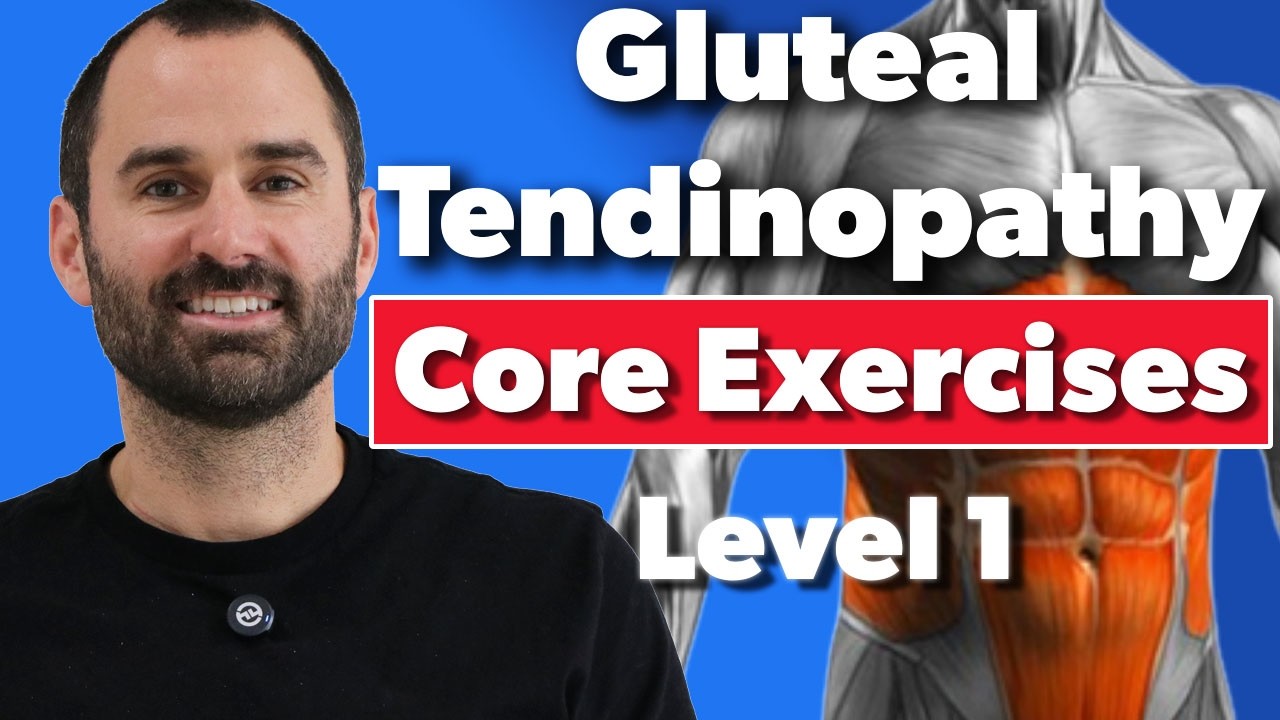
Follow along with the level 1 exercises in this video.
Level 2: Intermediate (Supine, Quadruped & Elevated Support)
Introduces horizontal core control while keeping compressive forces off the gluteal tendons.
-
Supine Brace + Arm Raise: Lie on your back with knees bent. Gently brace and move your arms overhead without letting your ribcage flare. 2–3 sets of 8–12 reps.
-
Elevated Plank + Brace: Hands or forearms on a sturdy bench or couch. Keep your body straight and ribs controlled. 2–3 sets of 15–30 seconds.
-
Bird Dog Hold + Brace: From hands and knees, brace and extend opposite arm and leg. Keep the leg parallel to the floor—do not lift excessively high. 2–3 sets of 5–8 reps per side (5–10 second holds).
-
Wall Side Plank + Brace: Stand sideways and lean your forearm against the wall for support. Maintain a straight line while bracing. 2–3 sets of 15–30 seconds per side.
Progression Criteria: Move to Level 3 when you can maintain a steady trunk, exercises are easy and normal breathing without provoking glute or hip symptoms.

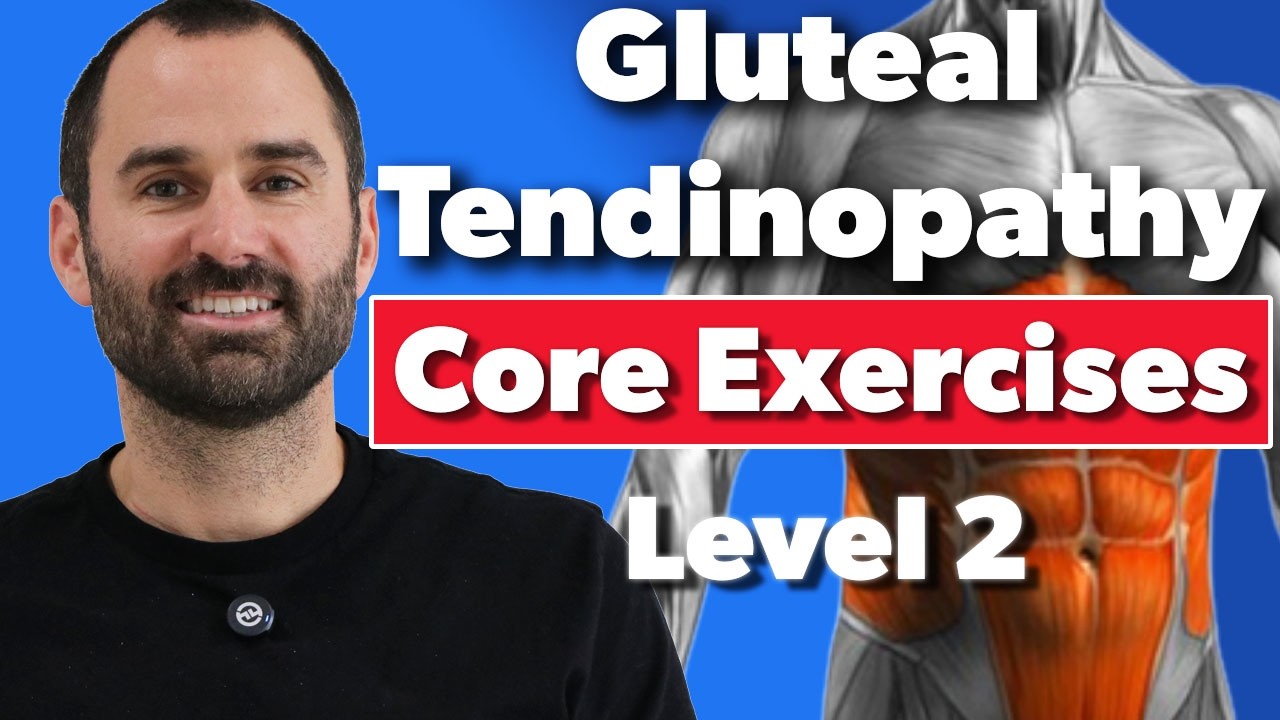
Follow along with the level 2 exercises in this video.
Level 3: Advanced (Floor Planks & Loaded Movements)
For establishing higher trunk control required for returning to sport or active lifestyles.
-
Supine 90/90 Legs + Arm Raise: Lie back with hips and knees at 90 degrees. Maintain your brace while slowly moving arms overhead. 2–3 sets of 8–12 reps.
-
Knee Plank: Progress from elevated plank to a floor-based knee plank. Keep ribs pulled toward your pelvis to prevent lower back sagging. 2–3 sets of 20–40 seconds.
-
Side Plank: Perform a side plank off knees (or feet if symptom-free). Ensure the bottom hip remains lifted and hips stay neutral. 2–3 sets of 15–30 seconds per side.

Clinical Takeaways
-
Quality First: Never trade core alignment for longer hold times or higher reps.
-
Listen to Symptoms: Core work should not increase lateral hip aching or sharp pain. If symptoms flare, step back a level.
-
Avoid Lateral Compression: Limit high-range leg lifts or deep side planks that compress the gluteal tendon against the bone.
Frequently Asked Questions
Why is core bracing important for gluteal tendinopathy?
Core bracing stabilizes the pelvis and lower back, preventing side-to-side pelvic tilting during daily movement. This reduces compressive stress on the gluteal tendons at the lateral hip.
Can core exercises irritate gluteal tendinopathy?
Yes, if exercises cross the leg past midline (adduction), lift the leg high to the side (abduction), or allow the pelvis to sag. Keep core movements focused on trunk control rather than hip movement.
When should I progress to the next level?
Progress when you can perform all exercises in your current level with controlled trunk positioning, steady breathing, and zero lateral hip pain during or after the session.
Should I hold my breath during core bracing?
No. Holding your breath builds intrathoracic pressure instead of functional abdominal stability. Practice breathing normally into your diaphragm while holding your brace.


